

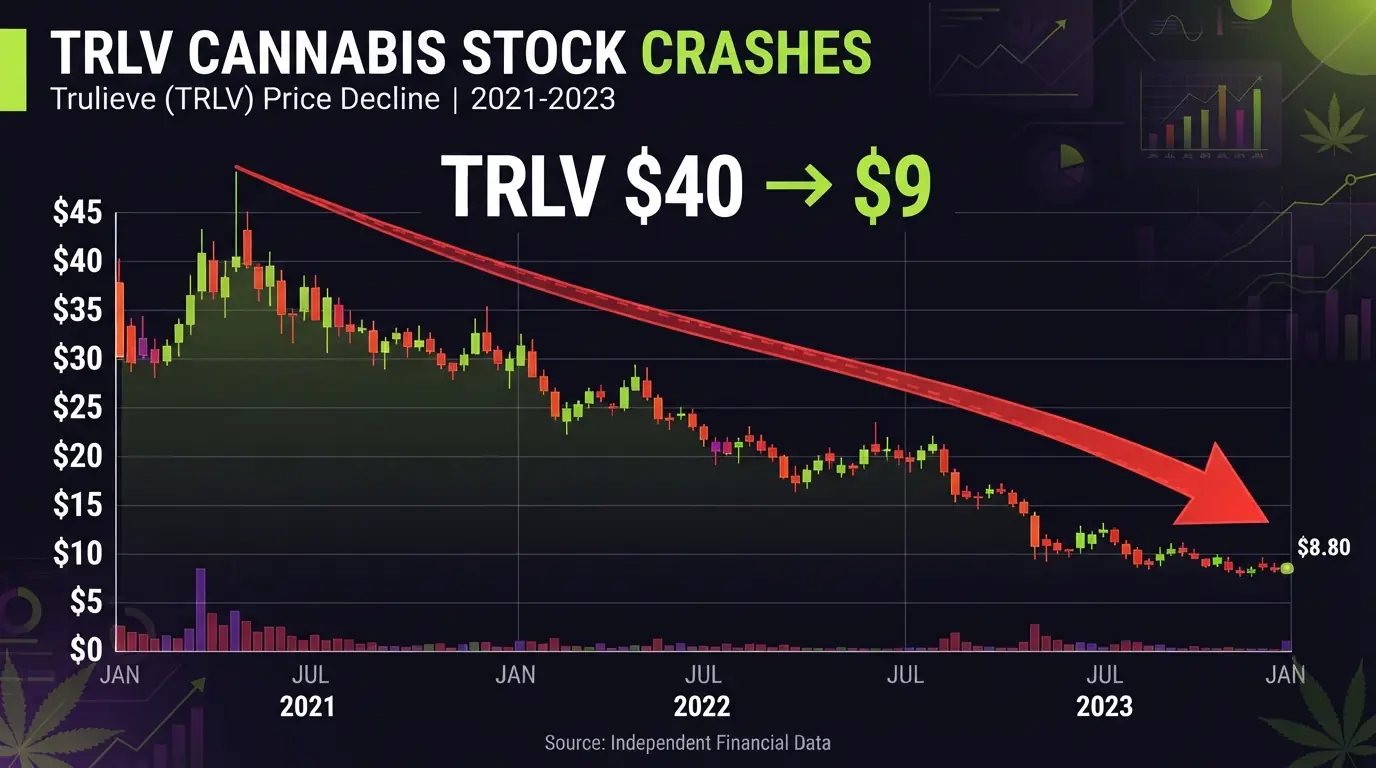
Trulieve's stock tells a story that is really the story of the entire U.S. cannabis sector: a euphoric peak, a long grind down, and a recent attempt at reinvention. Here is what happened, in plain English and without spin.
The peak. In early 2021, Trulieve shares traded above $40, reaching the mid $40s, during a broad rally in cannabis stocks. That rally was fueled by optimism after the 2020 U.S. elections that federal marijuana reform, including banking access and possibly rescheduling or legalization, was finally close. Investors priced cannabis companies for rapid, nationwide growth.
The fall. That growth story ran into reality. Federal reform stalled in Washington for years; the banking legislation the industry counted on repeatedly failed to pass. Without federal change, plant touching cannabis companies remained subject to Section 280E of the federal tax code, which bars them from deducting normal business expenses and leaves them with punishingly high effective tax rates. At the same time, state markets that had boomed began to see oversupply and falling wholesale prices, squeezing margins. Many operators, Trulieve among them, had taken on debt and issued shares to fund expansion, and as enthusiasm faded, speculative growth stocks were repriced sharply lower across the board. The result was a multi year slide that pulled most cannabis equities down by the better part of their value.
Where it stands now. As of the close on July 16, 2026, Trulieve (now trading on the NYSE under the ticker TRLV) closed at $8.41 per share, a small fraction of its 2021 high. The company has changed tickers and venues along the way, having previously traded over the counter as TCNNF and on the Canadian Securities Exchange before its 2026 move to the NYSE.
What recently changed. In 2026, two developments gave the company a new narrative. Marijuana was rescheduled to Schedule III at the federal level, and Trulieve restructured to place its DEA registered medical assets into a company that uplisted to the New York Stock Exchange, the first U.S. plant touching cannabis company to list there. Whether those moves translate into a durable recovery in the share price is exactly the open question investors are now weighing; a listing venue and a schedule change are not, by themselves, earnings.
The short version: Trulieve's stock didn't fall because of any single event. It rose on a bet that federal reform was imminent, and it fell as that bet went unpaid year after year, amid sector wide taxes, oversupply, and a flight from speculative names. The recent rescheduling and NYSE listing are the company's attempt to write a different next chapter.
This is general business reporting, not investment advice. Stock prices change constantly; confirm current figures before relying on them.


 By Nate Jurewicz, Chief Editor