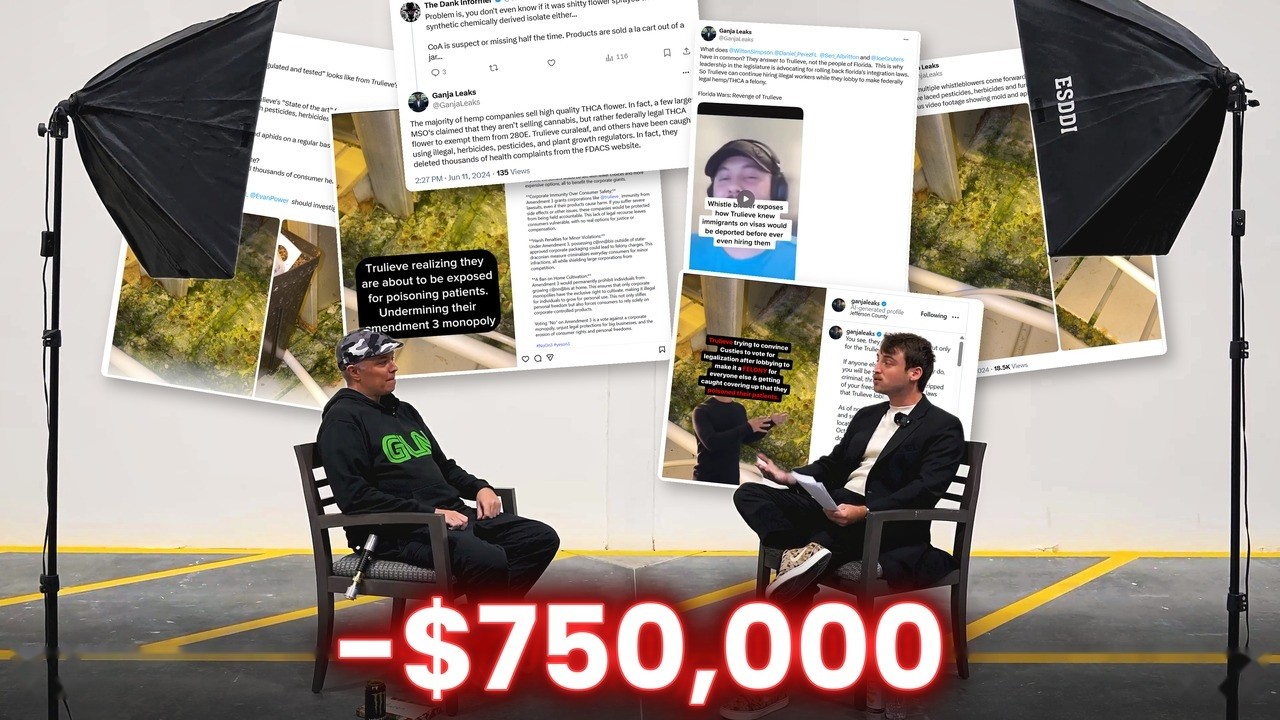
The legal battle involving Trulieve and Ganja Leaks is moving forward following two important court hearings. In the video above, Nate provides an update on the court's recent decisions, the fight to protect confidential sources and the next phase of the case.
Despite representing himself without an attorney, Nate continues to prepare motions, organize evidence and respond to a legal team consisting of multiple attorneys. The case has now entered the discovery and deposition stage, creating significant new legal expenses.
The motion to compel
The first hearing addressed Trulieve's motion to compel. As part of discovery, Trulieve sought communications related to Nate's reporting and coverage of the company.
Nate argued that the scope of the requested information should be limited to protect people who had communicated with Ganja Leaks under the expectation that their identities would remain confidential. The disagreement centered on whether Florida's journalist-privilege law applied to his work as an independent, previously unpaid publisher.
The court ultimately ruled in Trulieve's favor, requiring Nate to produce relevant electronic communications. This included approximately 1,200 to 1,300 screenshots collected from text messages, social-media accounts and other communications concerning Trulieve.
As explained in the video, the disclosure process required a substantial amount of time and raised serious concerns about the future willingness of employees, patients and other sources to speak with independent journalists.
Nate has since taken steps to strengthen Ganja Leaks' status as an independent news publication, including establishing this website, joining a professional press organization and formalizing the publication's operations.
What the disclosed communications show
Although the production of confidential communications was a major setback, the messages may also provide important context for the defense.
In a defamation case, the plaintiff's ability to establish actual malice can become a central issue. Actual malice generally concerns whether a statement was published with knowledge that it was false or with reckless disregard for whether it was true.
Nate maintains that the disclosed communications demonstrate an effort to collect evidence, communicate with sources and investigate information before publication—not a deliberate attempt to publish information known to be false.
The meaning and legal significance of that evidence will ultimately be determined through the court process.
The anti-SLAPP motion
The second hearing concerned Nate's motion to dismiss the case under Florida's anti-SLAPP protections.
SLAPP lawsuits—Strategic Lawsuits Against Public Participation—are generally understood as legal actions intended to burden or silence people who speak about matters of public concern. Anti-SLAPP laws provide mechanisms for challenging qualifying cases and, under certain circumstances, recovering legal expenses.
Nate argued that the lawsuit targeted protected speech concerning a major corporation and issues affecting the public. However, the court did not dismiss the case at this stage.
As Nate explains in the video, the court has not yet evaluated the complete body of evidence. Because the motion was denied, the lawsuit will continue through discovery and may proceed to trial unless it is resolved beforehand.
The ruling was not a final determination that the challenged reporting was false or that Trulieve had prevailed on its underlying claims. It means the case will continue and both sides will have an opportunity to develop and present evidence.
Discovery and depositions come next
The case is now entering a resource-intensive phase involving updated disclosures, evidence production and depositions.
Nate says he has obtained additional evidence relating to the publications at issue since the lawsuit began. That material must now be organized, reviewed and disclosed in accordance with court deadlines.
Depositions create another significant challenge. Testimony must generally be preserved by a qualified court reporter, and the combined cost of conducting multiple depositions can reach thousands of dollars. Those expenses come in addition to filing costs, research, document preparation and the time required to respond to Trulieve's legal team.
Nate has handled the case pro se because the Legal Defense Fund has not raised enough to retain an attorney. Preparing the defense has effectively become a full-time job and has affected his ability to operate his real-estate business.
Support the Ganja Leaks Legal Defense Fund
Contributions will support essential case expenses, including court reporters, depositions, document preparation and other costs associated with defending the lawsuit.
Donations of any size can make a meaningful difference. The fundraiser also allows supporters to contribute without publicly displaying their names.
Thank you to everyone who has watched, shared information, offered encouragement or contributed to the defense. Ganja Leaks will continue reporting on the case as it develops.
This article summarizes Nate's account and understanding of ongoing legal proceedings. Allegations and disputed statements discussed in the video have not necessarily been established as facts or resolved by a final court judgment.
 By Ganja Guy